Tuesday, May 24, 2011

Cinnamon teal, Montlake Fill

Isn't he handsome?

I would gawk at that red eye, those chestnut feathers and china blue shoulder patches, even if cinnamon teal were animals I saw all the time.
As it is, it's all new. A life bird, in fact. When I watched a pair of them fly around me, and then came across this drake, that was my first time noticing this species.
I am not a "lister" -- though I do track what I see when I'm traveling -- but I do get a satisfaction out of witnessing a species new to me.
It's an allure that makes birders biased observers of nature. We're great at spotting whatever storm-tossed oddities show up in our area, but we can be oblivious to huge population shifts in common birds.
And common birds do have their pleasures, though they might not be as easily summarized in the phrase "life bird." There's the way a gaudy bird, such as a common yellowthroat, can vanish into a shrub. There's the sputterings of a marsh wren, a bird given to extended diatribes of squeaks, rattles, buzzes and notes - part bird, part machine, all bad-ass. There's the constant rivalry of red-winged blackbirds, with the males calling from cattails and shrubs, and the females discreetly jockeying for position below. This time of year, the males are ready to attack all comers, other males, crows, and eagles.
So I'd have had a nice time birding, even if I hadn't seen the cinnamon teal. But I'm glad I did.

Seen in Discovery Park, May 17

When I pointed this Hooker's willow out to my Dad, he asked me which famous 19th century naturalist it was named after: Sir William Jackson Hooker, the first official director of Kew Gardens or his son Sir Joseph Dalton Hooker, the second director of Kew Gardens. It was an amazingly trivial question, so of course I Googled the answer. It's William.


I believe this is Pacific willow.


And this is youth-on-age.


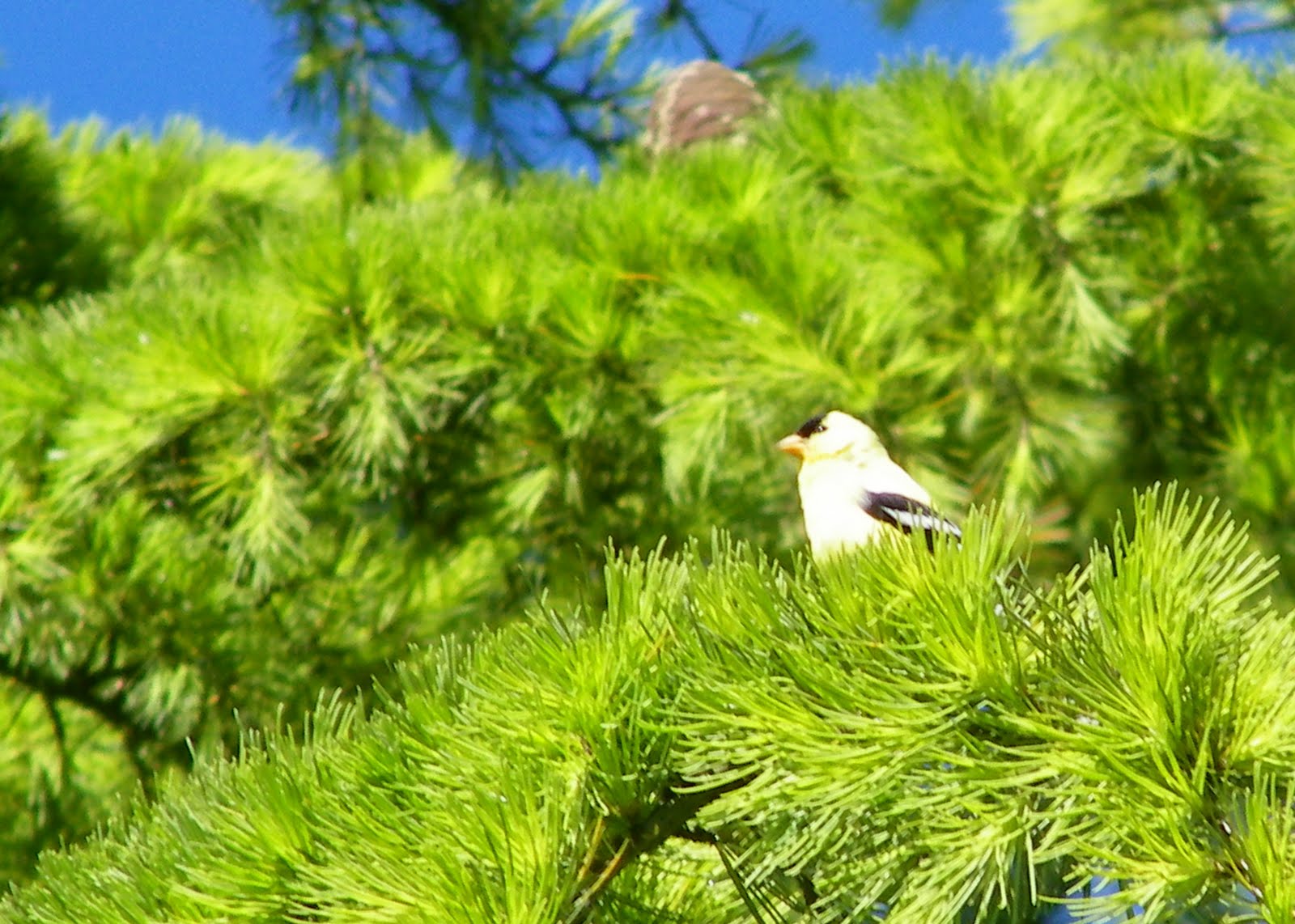
Bright yellow goldfinch, dark green pine.


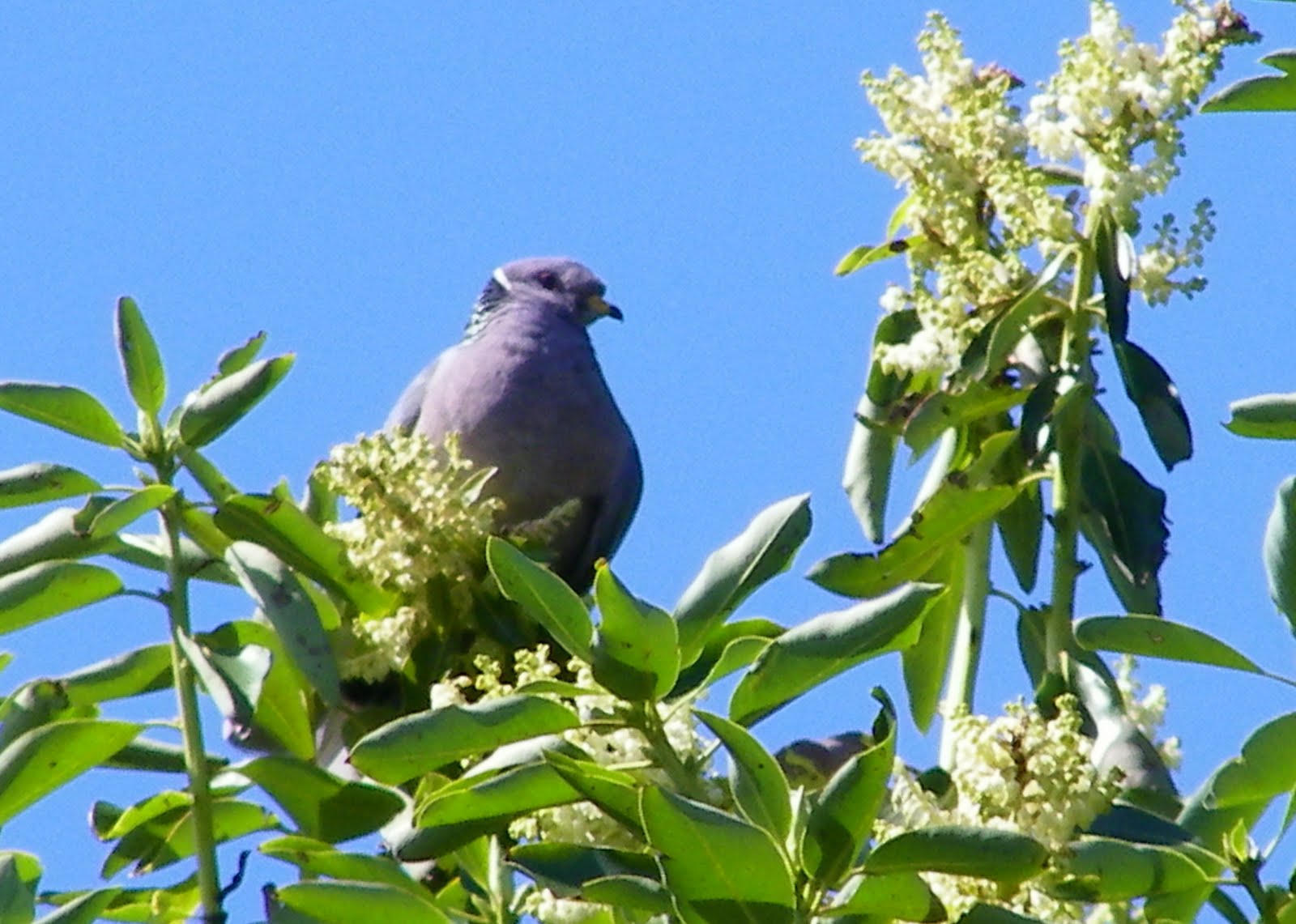
Band-tailed pigeon on madrona.

Tuesday, January 11, 2011

Varied Thrush, Discovery Park

The woods at Discovery Park were quiet this morning. With temperatures near freezing and snow on the way, few birds were interested in loud dissertations on territory or romance. They were too busy eating. Those in groups had a chirp here and there, and one pileated woopecker let out a long cackle but most birds were quiet. The best way to see one was to watch for movement.
Still, the cold weather brought some beautiful visitors.

Varied thrushes are a species most birders are a little silly about. Their plumage is beautiful, with the blue-gray back and the bold orange stripes. Their call is haunting, and their habits mean that it's a treat to see one.
They prefer old forests, and generally only come to town when harsh weather pushes them out of the high country. They also delight in foiling all my attempts to photograph them. They tend to bounce out of the way whenever I aim my camera, and when I look up to reposition it, it often takes me a while to find them -- those orange stripes have an amazing way of blending in. So, I'm happy to have one in focus. Almost, anyway.

Tuesday, January 4, 2011

Goose neck barnacles

There's a beach we like to go to that has a rocky outcrop pointing toward Trial Island. The deeper crevices in the rocks are full of goose neck barnacles.

They are attached to the rock by a leathery neck, so they can bend with the waves, as they gather plankton.

The waves carried them here, in the form of larvae that cemented themselves to the rock. And after they mate in the spring the waves will take their larvae away.

Monday, January 3, 2011

Backyard birds small and big

Who says a hummingbird feeder can't be a bushtit feeder? Every so often, a gang of about 20 little gray birds surrounds my parents' hummingbird feeder.

The Anna's hummingbirds that hang around the feeder let the bushtits. There are at least two adult males and one sub adult that use the feeder, and they chase each other on sight.

Little birds weren't the only yard visitors.

This great blue heron looked around the yard,

but apparently saw nothing of interest.

Sunday, December 26, 2010

Winter peeps, Victoria

On my Christmas Day walk, I found a small flock of black turnstones, trotting around the edge of the rocks as the waves rolled around. Their high-pitched trilling voices cut through the sound of the sea.


The sky was amazing.

From an earlier walk, a flock of greater yellowlegs sheltering from a gale.

Monday, November 29, 2010

Out again after too long

I went to Discovery Park today, for the first time in months. There was a lot of noise from construction crews removing the remains of the small military installation, Fort Lawton, that used to take up part of the park.
I walked down the path thinking of work-a-day things: dinner menus, job applications, shopping lists, when I saw a small small movement to the side. I tried, as usual, to take a picture, and as usual, I failed.

But here it is, a tiny brown bird with a big beautiful voice, the Pacific Wren, formerly known as the Winter Wren. And then all of a sudden birds were all around me: a pileated woodpecker in the distance, a downy woodpecker in the alder above me. chestnut-backed chickadees on the bushes, and ruby-crowned kinglets and golden-crowned kinglets darting in and out of the sword ferns. It was as if I had passed through a magic door, and the quiet, winter-drab woods had come to chirping life.
No decent pictures though. My big mammal hands and eyes were too slow.
I did come across a handsome pair of fox sparrows in the meadow, on the way back.